
The Upstage team develops exhibition booth design strategies by first understanding client goals and brand identity to create authentic, resonant spaces. They research industry trends and competitors to identify opportunities for differentiation. Through collaborative brainstorming booth design for exhibition, they foster creativity and translate ideas visually. Functional layouts are combined with creative visuals to guarantee smooth visitor flow and engagement. An iterative feedback process refines the design to maximize impact. Exploring these steps reveals how Upstage crafts effective, innovative booth experiences.
Understanding Client Objectives and Brand Identity
Before initiating the design process, a clear comprehension of the client’s objectives and brand identity is essential. The Upstage team begins by identifying the core goals the client wishes to achieve through their exhibition presence, whether increasing visibility https://upstageexpo.com/home, generating leads, or strengthening customer relationships.
Equally important is grasping the brand’s personality, values, and messaging to guarantee the booth visually and experientially reflects these elements. This foundational understanding empowers the design team to create spaces that resonate authentically with the target audience while enabling clients to express themselves freely.
Researching Industry Trends and Competitor Analysis
While designing an exhibition booth, thorough research into current industry trends and competitor strategies is essential for creating a distinctive and effective presence.
The Upstage team systematically monitors emerging design techniques, technology integrations, and audience engagement methods shaping the exhibition landscape. This insight guides informed decisions that align with evolving expectations while maintaining originality.
Competitor analysis involves evaluating rivals’ booth layouts, messaging, and interactive elements to identify gaps and opportunities for differentiation. By understanding competitors’ strengths and weaknesses, the team can tailor their approach to stand out without imitating.
This research-driven foundation empowers the Upstage team to craft booths that not only attract attention but also resonate authentically with their client’s target audience, fostering meaningful connections and sustained impact.
Collaborative Brainstorming and Concept Development
Frequently, the collaborative brainstorming and concept development phase serves as the creative cornerstone in exhibition booth design. Within the Upstage team, this stage encourages open dialogue, merging diverse perspectives to evoke innovative ideas.
Team members embrace freedom in thought, challenging conventions to craft unique concepts that resonate with target audiences. The process typically unfolds through:
- Ideation sessions where unrestricted creativity sparks fresh approaches.
- Visual sketching and mood boards to translate abstract ideas into tangible forms.
- Constructive feedback loops ensuring each concept aligns with brand identity and strategic goals.
This dynamic interplay empowers the team to explore bold solutions, ensuring the final booth concept is both imaginative and purposeful, setting the foundation for impactful exhibition experiences.

Integrating Functional Layouts With Creative Visuals
Although creative visuals capture attention, their impact depends on a functional layout that facilitates smooth visitor flow and engagement.
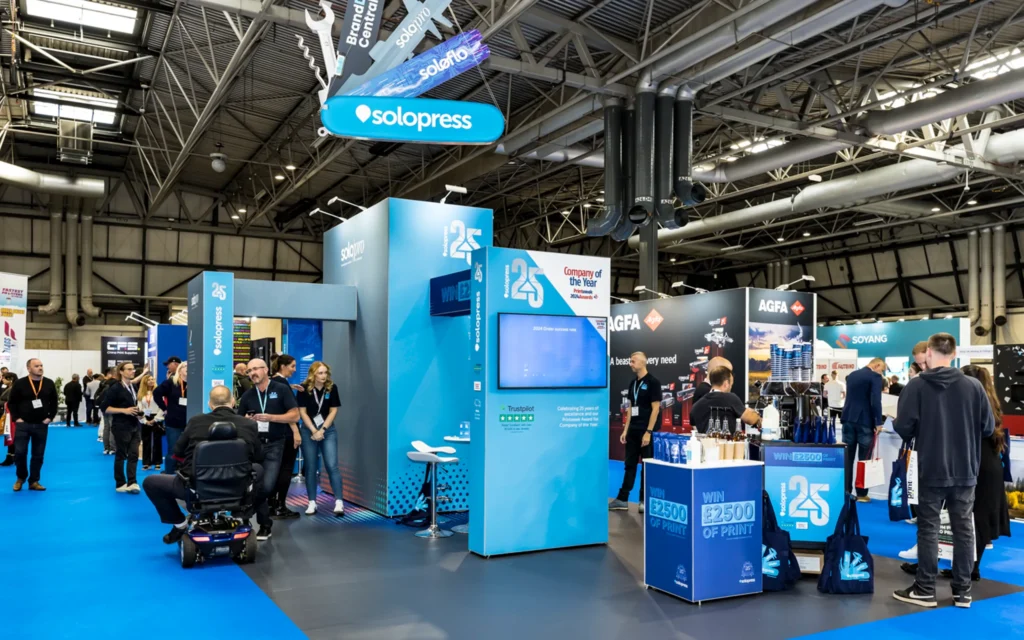
The Upstage team strategically merges imaginative design elements with practical spatial arrangements to create booths that are both striking and accessible. This integration guarantees that visitors instinctively navigate the space, encountering key messages without obstruction.
Visual components are placed to enhance wayfinding and interaction zones, supporting natural pauses and conversations. The balance between aesthetics and utility empowers exhibitors to communicate their brand effectively while allowing guests the freedom to explore without feeling confined.
Iterative Feedback and Refinement Process
How can continuous improvement elevate exhibition booth design to its highest potential? Within the Upstage team, the iterative feedback and refinement process is pivotal. It allows the design to evolve freely, responding dynamically to real-world insights and creative impulses.
This process guarantees the booth is not just visually appealing but functionally superior and aligned with brand identity. The cycle typically involves:
- Gathering detailed feedback from stakeholders and potential attendees after initial design presentations.
- Analyzing insights to identify opportunities for enhancement in both aesthetics and usability.
- Implementing targeted refinements before validating changes through further review rounds.
This methodology empowers the team to break free from static concepts, fostering innovation and adaptability that resonate with audiences seeking authentic, engaging experiences.
Conclusion
The Upstage team’s exhibition booth design strategy is a carefully structured process that begins with understanding client objectives and brand identity. By researching industry trends and analyzing competitors, the team confirms relevance and innovation. Collaborative brainstorming fosters creative concept development, while functional layouts are seamlessly integrated with compelling visuals. An iterative feedback and refinement process assures alignment with client expectations, resulting in a cohesive, impactful booth design that effectively represents the brand in a competitive environment.